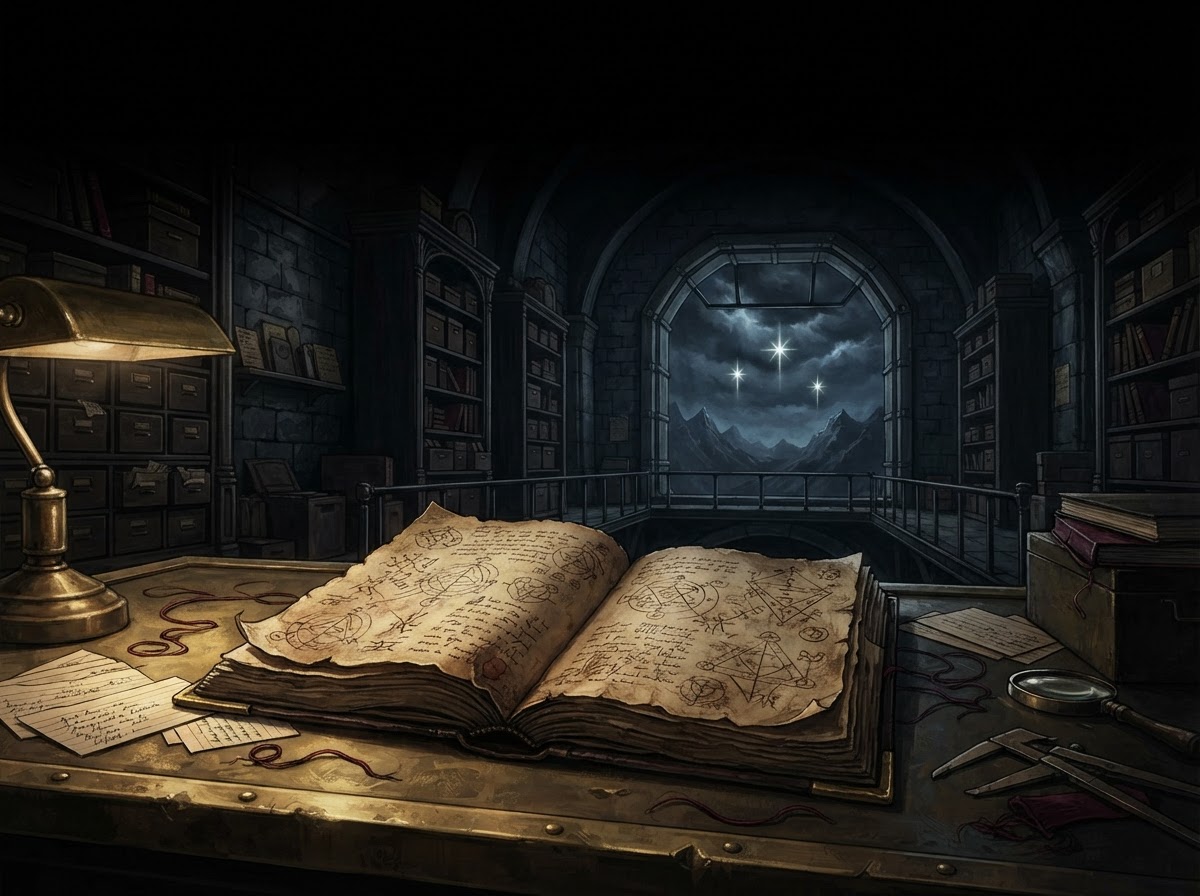
THE HOOK: A handful of strange lines in Genesis became a full cosmic crime scene in later Jewish writings: heavenly Watchers descend, forbidden knowledge leaks into human life, giants rampage, and the Flood becomes a judgment on a world out of balance. It is an extraordinary ancient story—and a fascinating record of how readers wrestled with evil, violence, and the boundaries between heaven and earth.
THE BIBLICAL SEED // GENESIS 6:1–4: The short passage mentions “sons of God,” human women, the Nephilim, and “mighty men” of old. It does not explain who the sons of God are, exactly how the Nephilim relate to the children, or whether the Nephilim are the offspring. Translation and interpretation have varied; the text itself leaves real ambiguity.
THE ENOCHIC EXPANSION // A PARAPHRASE OF 1 ENOCH 6–16: In the Book of the Watchers, a group of 200 Watchers swear an oath on Mount Hermon, led by Shemihazah, and take human wives. The text also associates Asael/Azazel with teaching arts such as metalworking, weapon-making, and adornment. Their giant offspring become violent and consume the earth’s resources. Enoch is drawn into the heavenly response; the Watchers’ appeal is rejected, and the Flood is framed as divine judgment. Details and names shift among manuscript witnesses and later retellings.
THE GIANTS’ OWN FILE // BOOK OF GIANTS: Fragmentary Aramaic copies from Qumran preserve another work about the giant offspring. The surviving pieces include figures commonly reconstructed as Ohya and Hahya, troubling dreams, and Enoch as interpreter. The story is incomplete: missing fragments mean scholars cannot restore every scene or the work’s full ending. The manuscript evidence shows that this tradition circulated in antiquity; it does not independently prove that giants existed as described.
WHO WERE THE “SONS OF GOD”? Ancient and later interpreters have offered different readings, including heavenly beings/angels, human lineages, or powerful rulers. The Watchers interpretation became influential in Second Temple Jewish literature and later Christian reception, but Genesis 6 itself does not unambiguously settle the question. “Fallen angels” is a useful shorthand for one strand of the tradition, not a single, unchanged doctrine shared by every Jewish or Christian community.
THE JUICY BUT CAREFUL TAKE: Read it as mythic/apocalyptic literature with vivid supernatural claims, not as a modern archaeological report. The real evidence trail is compelling enough: ancient manuscripts, evolving interpretations, and a wild narrative that helped explain forbidden knowledge, violence, and the origins of evil. Modern claims that giant skeletons or secret cover-ups prove a lost race remain unverified; an image or viral story is not a provenance record, excavation report, or independently examined specimen.
FOLLOW THE CLUES: Start with Genesis, compare the Watchers story, inspect the surviving Dead Sea Scroll manuscript record, then read a scholarly overview. Keep three columns in your notes: what the source text says, what later interpreters infer, and what modern speculation adds.
SOURCE ARCHIVE // PRIMARY TEXTS · SCHOLARSHIP · MANUSCRIPTS